When I first started editing landscape photos, I’d sometimes stare at the screen wondering why my images looked so lifeless.
I remembered the feeling of being in that landscape but on my monitor, everything felt dull and disconnected.
If you’ve ever asked yourself how do I make my photos less flat, you’re not alone. The truth is, it’s rarely just a technical problem.
More often, it’s about reconnecting the emotion you felt in the field with how you express it in your final image.
How Do I Make My Photos Less Flat
Why Do My Edits Feel Flat?
Flat edits often come from a disconnect between what we experienced and what we’re trying to recreate. Sometimes we overcorrect exposure, lifting shadows and pulling down highlights until the light feels too even.
Other times, we desaturate to chase “clean color” and end up removing all the warmth that made the scene come alive. When everything is balanced but nothing stands out, your image loses its heartbeat.
Instead of chasing perfection, ask what feeling drew you to that scene. Once you reconnect to that, your editing becomes more intentional and less about fixing and more about translating emotion.

Discover Your Next Journey – These Tours are designed for people who connect with light and landscape.
Why do my photos look flat even when the light was good?
Even in great light, your images can appear flat if your exposure or contrast lacks direction. Over-editing shadows and highlights, using too much clarity, or neutralizing color contrast can all dull the image.
Try adjusting local contrast rather than global contrast, and balance tonal separation with subtle color harmony. Remember that good light needs interpretation; it’s not just brightness, but shape, tone, and how it interacts with the emotion of your subject.

Composition and Depth for Emotional Impact
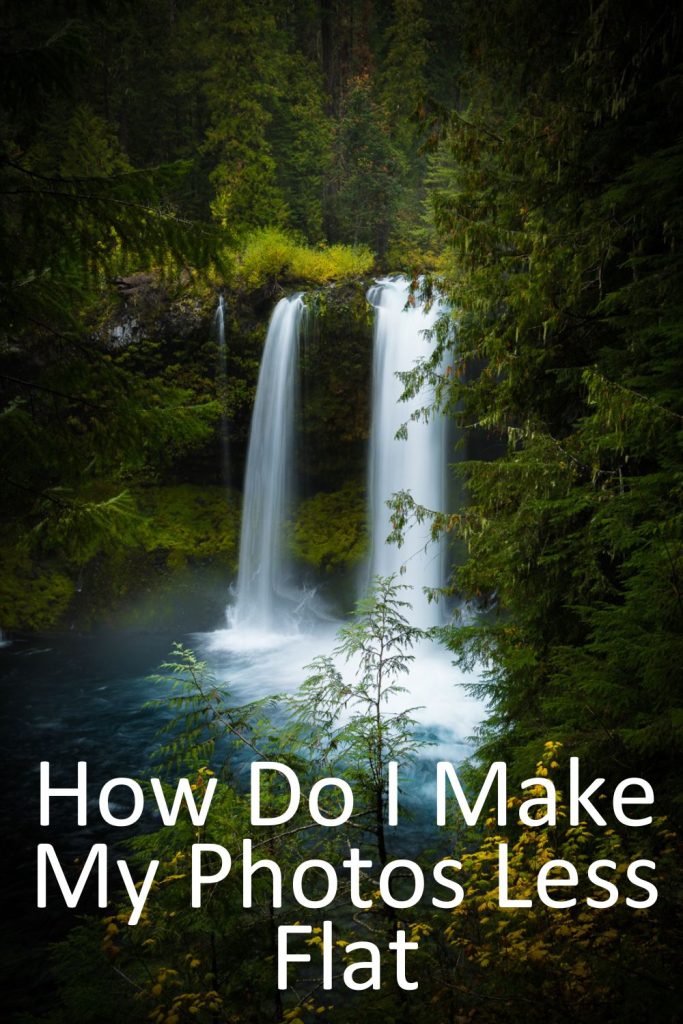
Flatness often comes from compositions that lack depth. Landscapes feel more immersive when you create visual layers: a foreground to ground the viewer, a middle distance to lead them in, and a background to hold their gaze.
Look for elements that guide the eye such as a river, a fallen log, or the curve of a dune. Even subtle changes in your shooting position can transform an image.
Depth also comes from your lens choice. A wide-angle lens exaggerates distance, making the viewer feel as if they’re standing right there. A telephoto lens, on the other hand, compresses space, emphasizing patterns and layers.
Both can create depth when used intentionally. The goal isn’t to copy a “rule,” but to arrange your composition in a way that lets the viewer step into the feeling you had while shooting.
📸Learn for free!
➡️ FREE Wallpapers and Guides
➡️ DISCOUNTS on future Tours & Tutorials
➡️ TIPS for improving Your photography
You can unsubscribe at anytime.
Using Light to Avoid Flat Images
Light shapes emotion. A scene bathed in soft, overcast light may feel peaceful, while a low sun slicing through fog adds tension and mystery.
Flat photos often happen when the light itself lacks direction or contrast. Try working with light that defines form especially early morning or late afternoon, when shadows stretch and glow.
Even in flat midday light, you can find interest. Focus on backlighting translucent leaves or using reflections to create contrast. In the forest, step into dappled light rather than away from it.
Light is one of your most powerful storytelling tools; learning to see it, not just use it, is what separates a snapshot from a photograph that moves people.
Color and Tone in Mood-Driven Edits
Color affects mood more than most photographers realize. Think of color as emotional temperature: warm tones (yellows, oranges) evoke comfort and vitality, while cool tones (blues, greens) bring calm or melancholy.
When editing, aim for tonal harmony for example the balance between light and shadow, warm and cool.
If your image feels flat, it may lack contrast not only in brightness but in temperature. Try introducing a hint of color separation between highlights and shadows. For example, warm up your highlights while cooling the shadows slightly.
This gives your photo visual tension, much like the interplay between sunlight and shade in nature.
Avoid the temptation to oversaturate. Instead, let subtle color shifts mimic what your eyes and heart felt at the scene. Editing is like conversation; you’re not shouting, instead, you’re revealing tone and meaning through nuance.
Edit to Evoke Mood, Not Perfection
One of the biggest reasons photos feel flat is that we edit toward neutral. We aim to please everyone by sanding off the rough edges, and in the process, we lose what made the moment ours.
Instead, edit to evoke a mood. If the scene felt heavy, deepen the shadows. If it felt light and ethereal, soften contrast and raise exposure slightly. There’s no single “correct” look; there’s only what aligns with the truth of your experience.
Sometimes mood-driven editing means breaking technical “rules.” Slight motion blur might convey energy better than perfect sharpness. Muted tones may speak louder than bright ones. The goal isn’t to create a flawless file, it’s to craft an image that makes the viewer feel something.
Capturing Emotion in Photography
Photography is emotional translation. You can’t photograph awe directly, but you can photograph the conditions that evoke it: scale, silence, light, distance. Emotional photography doesn’t happen by accident. It comes from slowing down enough to sense the rhythm of the place you’re in.
Before pressing the shutter, take a moment to notice what’s moving you. Is it the golden rim of light touching the horizon, or the way mist curls through trees?
Let that awareness shape your composition and your exposure choices. Emotion isn’t added in editing; it’s built from the start, in how you connect to the land before the click.
If you’re shooting the same locations repeatedly and feeling uninspired, shift your perspective.
Try photographing the forest from the ground, looking up through ferns, or use a long lens to isolate small scenes of texture and light. Often, the best way to avoid “flatness” is to see familiar places through new eyes.
Learn more about exposure, aperture, and the exposure triangle with these posts:
- Is it better to under or overexpose
- Exposure triangle for beginners
- Perfect Your aperture for Landscapes
- What is aperture and Depth of Field
- ISO in Photography
Conclusion: How Do I Make My Photos Less Flat?
When we ask how to make our photos less flat, what we’re really asking is how to make them feel alive. The answer lies in slowing down, reconnecting, and editing with intention. It’s about remembering what the scene meant to you; not just what it looked like.
Flat photos happen when we forget to translate feeling into image. Start with light, build depth through composition, and let your editing follow the emotion that called you to press the shutter in the first place.
- How Do I Make My Photos Less Flat
- Why Do My Edits Feel Flat?
- Why do my photos look flat even when the light was good?
- Composition and Depth for Emotional Impact
- Using Light to Avoid Flat Images
- Color and Tone in Mood-Driven Edits
- Edit to Evoke Mood, Not Perfection
- Capturing Emotion in Photography
- Conclusion: How Do I Make My Photos Less Flat?
- References
- 📸Learn for free!
- Learn more about exposure, aperture, and the exposure triangle with these posts:
References
- The Photographer’s Mind by Michael Freeman (Focal Press, 2011)
- Adobe Lightroom Classic Help: “Tone Curve and Color Grading for Mood”
- Capture One Pro User Guide: “Using Layers and Local Adjustments”
- Outdoor Photographer: “The Power of Light in Landscape Photography”
- Nature TTL: “Creating Depth in Your Landscape Photos”