

Composition in photography is the foundation of compelling landscape photography.
Understanding and applying the rules of photography composition can elevate your images from snapshots to captivating works of art.
These guidelines serve as essential tools to create balanced, visually pleasing, and impactful photographs.
Below, we explore 13 key rules of composition that every landscape photographer should know.
Composition in Photography
What is Composition in Photography?
Composition in photography refers to the arrangement of elements within the frame of an image. It’s the art of organizing visual elements in a way that is aesthetically pleasing and effectively communicates the intended message or emotion.
Composition plays a vital role in determining how a photo feels, how the viewer interacts with it, and how the various elements within the scene guide the viewer’s eye.
Essentially, composition in photography helps create a balanced and compelling image that grabs attention and evokes a response.
Good photography composition can turn an average snapshot into a captivating photograph, while poor composition can make even the most beautiful scene feel disjointed or unappealing.
It goes beyond simply pointing the camera at a subject; it’s about understanding how different elements, such as lines, shapes, colors, light, and space, can be arranged to create a visually interesting and harmonious photograph.
There are a number of established “rules” or guidelines in photography composition, such as the Rule of Thirds, leading lines, and symmetry, all of which aim to enhance the visual flow and guide the viewer’s eye through the image.
While these rules are helpful for beginners, advanced photographers often learn to break or bend them to create unique, impactful images that stand out.
Ultimately, composition in photography is about intention – it’s a way for photographers to consciously decide what to include, exclude, and how to highlight certain elements to create the most powerful image possible.
Whether you’re photographing landscapes, portraits, or anything in between, mastering composition is key to capturing compelling and beautiful photos.

Discover Your Next Journey – These Tours are designed for people who connect with light and landscape.
What Are the Rules of Composition and Why Do We Use Them
The rules of composition in photography are time-tested principles designed to guide photographers in arranging elements within a frame to achieve aesthetically pleasing results.
By adhering to these rules of composition in photography, photographers can create images that are balanced, engaging, and capable of conveying the intended message or emotion.
While these photo composition rules provide a solid foundation, they also allow for creative flexibility, enabling photographers to experiment and develop their unique styles.

Photography Composition Guide and Quick List
- Rule of Thirds
- Leading Lines
- Foreground Interest
- Symmetry and Reflections
- Framing
- Negative Space
- Golden Ratio
- Diagonal Lines
- Scale and Perspective
- Color and Contrast
- Balance
- Patterns and Textures
- Breaking the Rules
📸Learn for free!
➡️ FREE Wallpapers and Guides
➡️ DISCOUNTS on future Tours & Tutorials
➡️ TIPS for improving Your photography
You can unsubscribe at anytime.
What is the Rule of Thirds in Photography
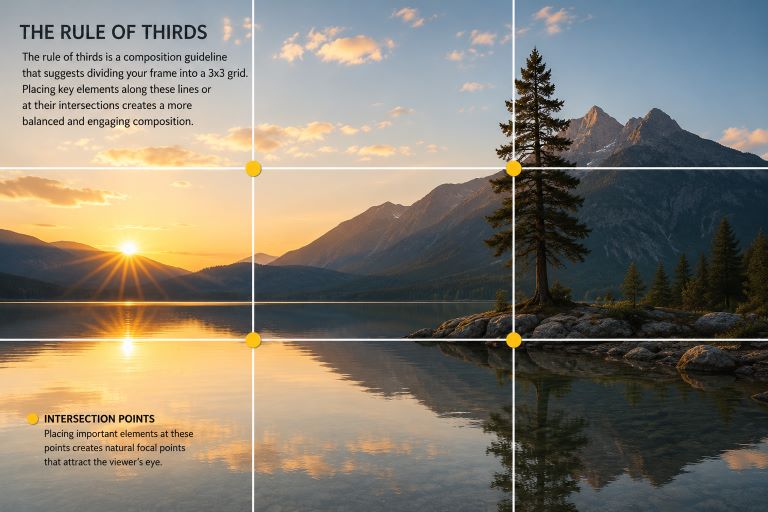
One of the most well-known photo composition techniques, the rule of thirds involves dividing your frame into a grid with two vertical and two horizontal lines, creating nine equal sections.
Placing key elements along these lines or at their intersections creates a more natural and aesthetically pleasing composition, helping to avoid centered, static images.
For instance, positioning the tree on the intersection points add depth and interest to this landscape shot, drawing the viewers eye through the frame.
Photo Compositing: The other 12 Rules
These elements are crucial for creating compelling compositions and are the main types of composition in photography genres of all kinds.
Strong photo composition is what transforms a simple landscape into a visual story that draws viewers in and holds their attention.
By learning the different types of composition in photography, you’ll not only sharpen your technical skills but also elevate the emotional impact of your work.
Whether you’re following traditional photography composition rules or intentionally breaking them, understanding these techniques gives you a creative edge.
Composition in Photography
Let’s explore the other 12 most effective strategies for composing breathtaking images.
Leading Lines
One of the classic types of composition in photography is the use of leading lines. Natural or man-made lines i.e. like rivers, trails, fences, or even rows of trees, can guide the viewer’s eye through the image, adding depth and pulling attention toward the focal point.
Leading lines create a sense of movement and direction, inviting the viewer to journey deeper into the frame.
Think of a winding mountain road snaking into the distance, drawing the eye toward the sunset beyond. It’s a perfect example of how photo composition can add narrative and flow to an image.
Leading lines create a sense of movement, helping the viewer engage with the scene.
For example, a winding road leading into the distance can draw the viewer’s gaze toward the horizon, enhancing the sense of journey within the photograph.


Foreground Interest
Incorporating elements in the foreground, such as rocks, flowers, or textured surfaces, can enhance the sense of depth and scale in your images.
This technique makes the viewer feel as if they could step into the scene, creating a more immersive experience.
A well-placed foreground element can serve as an anchor, leading the eye into the composition and toward the main subject.
Foreground interest not only enriches photography composition but also helps connect different layers of the image, leading the eye naturally from foreground to background.


Bring these images above home with you.
Symmetry and Reflections
Symmetry is another timeless technique that brings balance and harmony to a composition, while reflections add a sense of tranquility.
Water bodies, like lakes and still rivers, offer excellent opportunities to capture mirror-like reflections, creating a striking visual impact.
Capturing a snow-capped mountain reflected perfectly in a glassy lake is one of the most striking ways to use symmetry.
Incorporating reflections into your photography taps into our love of visual harmony and offers viewers a sense of calm and tranquility.


Framing
Utilizing natural frames such as tree branches, rock formations, or archways, can enclose your subject and focus attention on the key elements of the scene.
Framing also helps add context and depth to the image, drawing the viewer’s eye directly to the subject.
This technique in photography composition draws the viewer’s eye into the scene while providing context about the surroundings.
For instance, photographing a distant waterfall through an opening in the trees can create a sense of discovery and intrigue.



Negative Space
Sometimes, less is more. Leaving open space in your composition can help emphasize the subject and create a sense of tranquility.
Negative space prevents clutter and directs focus toward the main subject, allowing it to stand out more prominently.
An expansive sky or a vast field can serve as negative space that highlights a solitary tree or mountain.
A lone tree standing in a snow-covered field or a solitary boulder on a vast desert plain are perfect examples.
By minimizing distractions, negative space sharpens the emotional resonance of the photograp