
Have you ever wondered what is aperture in photography and depth of field?
These two fundamentals shape how your images look; determining how much of your scene is sharp, what’s blurred, and even how the light feels.
Whether you’re capturing a sweeping mountain vista or a single flower in focus, mastering these tools will help you tell your visual story with intention.
In this post, we’ll explore aperture in photography, explain depth of field in photography, and show you how to use them creatively in landscape shots.
I receive commissions from links in this post, thank you for your support
Why Understanding Aperture & Depth of Field Matters
What Is Aperture in Photography?
Think of it like the pupil of your eye; it can open wide in low light or close down in bright conditions.
But aperture also controls more than just light; it affects depth of field i.e. how much of your scene appears sharp from front to back.
The size of the aperture is measured in f-stops (like f/2.8, f/8, or f/16). Here’s the quirky part; the lower the number, the wider the opening.
So f/2.8 is a wide aperture that lets in lots of light (but gives you a shallower depth of field), while f/16 is a small opening that lets in less light but gives you more focus throughout the scene.
In landscape photography, aperture guides depth, sharpness, and mood. A narrow aperture (higher f/ number) deepens your field, while wider apertures introduce softness and intimacy.
I often tell my tour clients:
- Wide aperture = more light, less in focus
- Narrow aperture = less light, more in focus
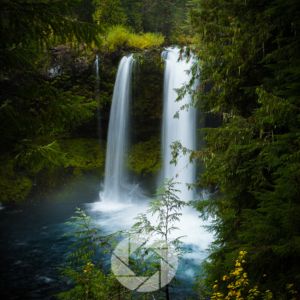
This simple relationship becomes the heartbeat of your landscape work. If you’re photographing a misty forest scene (air) or dramatic mountain ridges (earth), your chosen aperture becomes a way of translating how you feel into how the viewer sees.
It’s the technical side of storytelling, one that gives you artistic control over mood, sharpness, and emotion.
So when you hear “f-stop,” remember it’s just a way of expressing how open or closed your lens is and how much storytelling depth you’re allowing into your frame.

Discover Your Next Journey – These Tours are designed for people who connect with light and landscape.
What Is Depth of Field in Photography?
What is depth of field in photography? Depth of field (DOF) is the range, from near to far, that appears acceptably sharp. A deep depth of field means most or all of the scene is sharp (like landscapes), while a shallow depth of field isolates your subject by blurring the background .
DOF is influenced by three key factors:
- Aperture (f‑stop)
- Focal length
- Distance from your subject
Why Understanding Aperture Matters
Mastering aperture means composing more intentionally. It’s about choosing which details you want in focus and which to blur away for artistic impact.
Understanding aperture is about so much more than just getting a sharp photo; it’s about intentional storytelling through your lens.
When you understand how aperture shapes your depth of field, you stop guessing and start making deliberate, creative choices. Do you want every blade of grass and cloud in perfect focus? Or are you trying to guide the viewer’s eye to one small, significant detail?
Aperture lets you control what the viewer pays attention to. A narrow aperture (like f/11 or f/16) can capture a sweeping mountain vista with crispness from foreground to background which is great when you want your photo to feel immersive and expansive.
On the other hand, a wide aperture (like f/2.8 or f/4) draws attention to a single subject while letting the background fall away into a blur. It’s perfect for those quiet, poetic moments: a lone flower in a field, a raindrop clinging to a branch, a silhouette in the morning mist.
Understanding aperture also helps you shoot more confidently in changing light. If you’re chasing sunrise, sunset, or golden hour, knowing how to adjust your aperture gives you better control over exposure and image quality.
It prevents overexposure in bright light and allows you to shoot handheld in lower light without bumping up ISO unnecessarily.
Ultimately, aperture is your creative compass. The more fluent you become with it, the more you’ll notice your images start to reflect your personal style; whether that’s dramatic, moody, minimalist, or bold.
It’s one of the simplest ways to elevate your landscape photography from technical to intentional.
📸Learn for free!
➡️ FREE Wallpapers and Guides
➡️ DISCOUNTS on future Tours & Tutorials
➡️ TIPS for improving Your photography

You can unsubscribe at anytime.
How Does Aperture Affect Depth of Field?
A wider aperture (low f number like f/2.8 and f/4) creates a shallow DOF, perfect for portraits or highlighting a flower.
A smaller aperture (high f number like f/11 through f/16) deepens DOF; ideal for landscapes where you want everything crisp.
Reminder: wider apertures let more light in, requiring faster shutter speeds or lower ISO; smaller apertures need slower shutter speeds or higher ISO to maintain correct exposure.
What Does Shallow Depth of Field Mean?
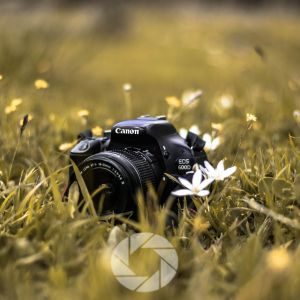
Shallow depth of field means that only a small part of your image is in sharp focus, while the rest appears soft or blurred. It’s that dreamy, cinematic look where the subject (like a wildflower in the foreground) is crystal clear, but everything behind it fades into a smooth, creamy blur.
This effect is achieved by using a wide aperture (such as f/1.8, f/2.8, or f/4). The wider the aperture (lower f-number), the shallower the depth of field.
In landscape photography, we don’t always think of shallow depth of field first, since we often want the whole scene in focus but it can be a powerful storytelling tool.
It helps isolate a subject, create intimacy, and guide the viewer’s attention. Think of a single branch in bloom against a soft background of forest haze, or a lone cairn standing sharp against blurred hills behind it.
Shallow depth of field can also add emotional or artistic depth. It softens distractions, simplifies your scene, and gives your images a more intentional feel. It’s particularly useful in scenes that are busy, chaotic, or cluttered; where focusing on one beautiful detail makes all the difference.
Controlling Depth of Field
Besides aperture, you can adjust DOF by:
- Changing distance from your subject (closer = shallower DOF)
- Using longer lenses (telephoto = shallower DOF) vs wide-angle (deeper DOF)
Aperture in Landscape Photography: Best Settings
Here’s a quick-reference chart to help you match aperture to your creative goal:
| Landscape Scenario | Effect Desired | Suggested Aperture |
|---|---|---|
| Sharp foreground–background landscapes | Maximum depth of field | f/11–f/16 |
| Soft flowing waterfall / sunburst | Sunbursts w/some motion emphasis | f/8–f/11 |
| Subject isolation in field or forest | Shallow depth with background blur | f/2.8–f/5.6 |
| Macro or close-up nature shots | Dramatic background separation | f/2.8–f/5.6 |
| Star trails or night sky | Deep focus, small star points | Less than f/4 |
Pro tip: Close down to f/11 for landscapes, but try to avoid f/1 or greater as diffraction can soften fine detail and is bad news for large prints.
Aperture and Background Blur (Bokeh)
Want creamy, dreamy blur? Use a wide aperture (low f‑stop number like f/2.8). This creates bokeh; that smooth, pleasing blur of background lights or shapes.
Creative Aperture Techniques for Landscape Photography
Once you’ve wrapped your head around what aperture is and how it affects depth of field, you can start using it as a tool for creative expression and not just technical control.
One of my favorite creative techniques is using a narrow aperture (like f/16 or f/22) to create sun stars; those radiant bursts of light that form when the sun hits your lens just right, usually when it’s peeking through trees or mountain ridges.
The smaller the aperture, the more defined the rays. Just be careful not to overdo it; too much diffraction at very narrow apertures can soften your image overall, so it’s all about balance.
Another trick is to intentionally blur parts of your scene by using a wide aperture (like f/2.8 or f/4). While landscape photography traditionally favors deep focus, there’s a certain magic in isolating a single wildflower in a sea of soft green, or letting the background melt away behind a branch or rock. This technique adds a sense of intimacy and depth that invites the viewer to linger.
Aperture also plays a big role in long exposure photography, especially when you’re shooting waterfalls, clouds, or ocean waves.
Pairing a small aperture with a neutral density (ND) filter allows you to stretch out your shutter time without blowing out your highlights. The result? Silky water, streaked skies, and a sense of serene stillness that elevates the mood of your image.
Experimenting with aperture is where the artistry really kicks in. Ask yourself what story you’re trying to tell with the scene; what should be in focus, and what can fade into the background? Let that guide your settings.
Learn more about exposure, aperture, and the exposure triangle with these posts:
- Is it better to under or overexpose
- Exposure triangle for beginners
- Perfect Your aperture for Landscapes
- What is aperture and Depth of Field
- ISO in Photography
Conclusion
Understanding what is aperture and depth of field in photography gives you creative power. It lets you decide what’s sharp, what’s blurred, and how light interacts with your scene.
Experiment with wide and narrow apertures, observe the results, and learn what works best for your style.
📸Learn for free!
➡️ FREE Wallpapers and Guides
➡️ DISCOUNTS on future Tours & Tutorials
➡️ TIPS for improving Your photography
You can unsubscribe at anytime.
- Why Understanding Aperture & Depth of Field Matters
- What Is Aperture in Photography?
- What Is Depth of Field in Photography?
- Why Understanding Aperture Matters
- How Does Aperture Affect Depth of Field?
- What Does Shallow Depth of Field Mean?
- Controlling Depth of Field
- Aperture in Landscape Photography: Best Settings
- Aperture and Background Blur (Bokeh)
- Creative Aperture Techniques for Landscape Photography
- Conclusion
- 📸Learn for free!
- Learn more about exposure, aperture, and the exposure triangle with these posts:
- 📸Learn for free!