

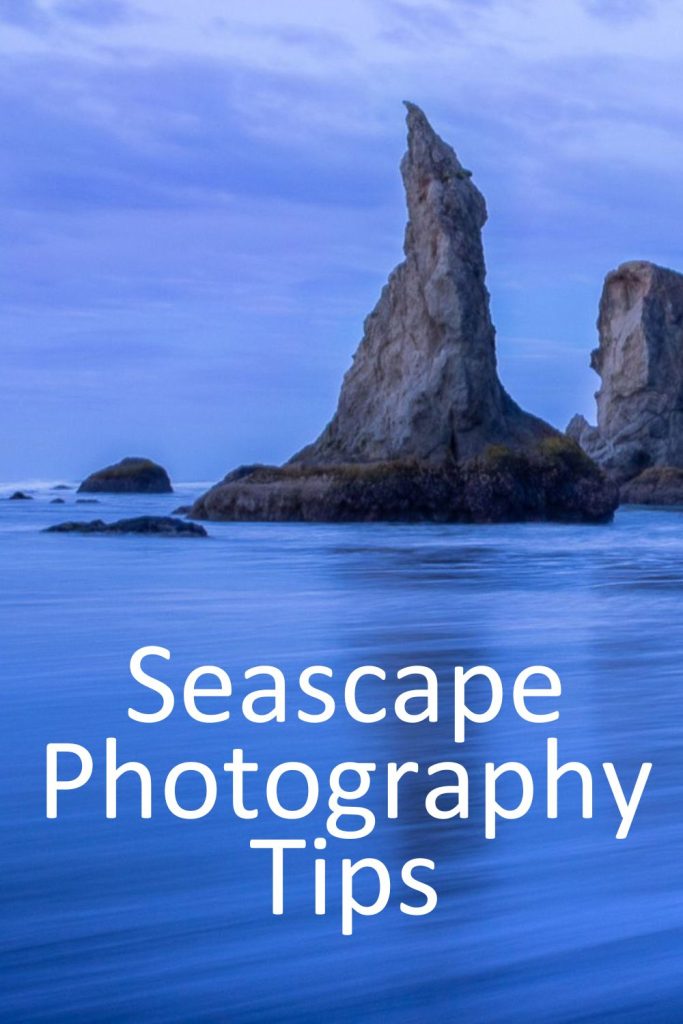
Seascape photography is more than capturing waves and sunsets; it’s about storytelling through light, movement, and mood.
Whether you’re setting out at Sidney Spit, exploring the dramatic cliffs of Mystic Beach or chasing storms on the Oregon coast, these seascape photography tips will help you deepen your craft and grow as a photographer.
In this post, we’re diving deep into the world of seascape photography; from capturing crashing waves and misty mornings to using light, weather, and creative techniques to elevate your images.
This article also contains practical tips, gear suggestions, and composition ideas to help you create more intentional seascape photographs.
I receive a small commission from links in this post, thank you for your support
Seascape Photography: The Water Element
Seascape Photography
The art of seascape photography lies in capturing the soul of the ocean; its energy, stillness, and rhythm. It’s not just about freezing a wave; it’s about shaping time and emotion through the dynamic nature of the water element.
I often begin with a moment of observation: how the wind whispers across the sand, how the light moves across the water, how the tide changes the landscape.
You’ll want to slow down, breathe, and let intuition steer your composition.
Start by identifying your subject such as a crashing wave, sea stacks, tide pools, and build everything around it: light, timing, and perspective.
When shooting beach landscape photography, think beyond the water. Include the textures, lines, and forms that shape the shoreline: driftwood, footprints, seaweed, dunes.
Pay attention to tidal timing as low tide gives you access to intriguing foregrounds, while high tide can add drama with crashing surf.
Gear for Seascape Photography and Why I Use It
- Wide Angle (Rokinon 14mm): great for entire scenes
- Zoom (Canon 24-105mm): narrow your scene, capture both wider and more intimate scenes
- Sturdy Tripod: for long exposures to blur clouds/weather and waves, incoming/outgoing tide
- Lens Cloths: you will get some spray on your camera and lens, good idea to periodically wipe everything down
- ND Filters: Capture longer exposures to create silky water effects in the waves
- Polarizer: Enhance colors and get 1 stop approx. of exposure when shooting in harsher daylight conditions
- Remote Trigger (or use in Camera timer)
Abstract Seascape Photography
Abstract seascape photography is where your imagination can truly play. By using slow shutter speeds, you can turn crashing waves into creamy, flowing forms.
Focus on color, contrast, and patterns (including shape and light) to craft a more painterly visual voice. Try framing with narrow compositions or using long exposures on concrete platforms during sunset.
Play with reflections in tidal pools or strange weather reflections to create something evocative and unique.
Tips for Beach Photography
I believe that the most important tip is to be early. Arrive early and explore your surroundings. Sketch mental maps of light, tide, wind direction, and potential subjects.
Keep track of your horizon and keep it level. Consider placing it high or low depending on your foreground or sky interest.
For your foreground, find textures like sand ridges, shells, or kelp to ground your composition.
Try a subtle pan during exposure to create motion blur in water while keeping anchored elements crisp. Or use ICM (intentional Camera Movement) to guide your composition.
Use warm morning light of golden hour or the serene blue hour to add emotion and color contrasts to your scenes.
Seascape Photos
Each of these seascape photos is capturing the water element; a quiet sunset on Sidney Spit, a storm-brewed sky over the Oregon coast, or the soft blur of waves retreating across misty sand.
These prints aren’t just pictures of the ocean; they’re invitations to pause, reflect, and reconnect with the elemental beauty of water and light.
Whether you’re drawn to the serenity of minimal compositions or the drama of crashing waves, these coastal scenes are available as fine art prints to bring a sense of calm, movement, and natural wonder into your space.
Seascape Photography and Weather
When it comes to seascape photography, weather isn’t just a backdrop, it’s one of the most important creative forces at play. Among the most impactful weather events to photograph are storms.
They bring intensity, contrast, and a raw energy that can turn an ordinary coastal scene into something unforgettable. But navigating stormy conditions requires a mix of preparation, intuition, and restraint.
Storms dramatically alter the quality of light. You’ll often find dark, moody skies layered with sudden shafts of golden or cool-toned light breaking through.
These fast-moving changes create contrasts; brooding clouds above a sunlit wave, or misty sea spray caught in a brief moment of clarity. If you can anticipate the light and wait for those intervals, your compositions will carry a heightened sense of tension and drama.
Movement is another powerful storytelling element during a storm. From fast-moving clouds to churning waves and wind-swept trees, everything seems alive and in motion. This is a perfect opportunity to play with longer shutter speeds.
A slower exposure can blur raindrops, smear wind-whipped waves, or turn clouds into surreal streaks overhead; all reinforcing the emotional weight of the scene.
Foregrounds in these situations can be optional. Sometimes the chaos in the sky is the subject. But if you choose to anchor your frame with driftwood, rocks, or shoreline textures, those elements can help ground the viewer while enhancing the sense of scale and drama above.
Of course, safety is paramount. Coastal storms can bring rogue waves, slippery rocks, and dangerous wind gusts.
Always keep an eye on the tide by using tide tables, know your escape routes, and never turn your back to the sea. But if conditions allow and you come prepared, stormy weather can offer some of the best seascape photography you’ll ever capture.
Seascape Photography Tips
Check Tides: Know when each beach is at its most dynamic (high tide crashing surf, low tide leading lines).
Tide timing can make or break a seascape photo. At high tide, crashing waves against cliffs or rocks create drama and movement which is perfect for long exposure shots that convey energy and motion.
Low tide, on the other hand, often reveals intricate sand textures, tide pools, driftwood patterns, and reflective wet surfaces, all of which make compelling foreground elements.
Knowing when the tide will be at its highest or lowest allows you to plan ahead for specific compositions. Apps like Tide Charts or Tides Near Me are excellent tools for tracking coastal conditions in real time. Also, In America check NOAA Tides online. And for Canadian Tides, check here.
Change Perspectives: Vary your shooting angle; stand, kneel, or lie down to find new compositions.
Most people shoot from eye level and that’s where most “okay” photos come from. To break out of the ordinary and create engaging, unique compositions, change your elevation. Kneeling or lying down can help emphasize foreground textures, like seaweed, ripples, or driftwood.
A low angle near a tide pool, for instance, might reflect the sky or clouds in a way that a higher perspective completely misses. Alternatively, climbing higher (if safe) can open up wide views of the coastline or frame interesting layers and curves in the landscape.
Each change in perspective tells a slightly different story and it’s often the difference between a snapshot and a standout image.
Tell a Story: Build an emotional narrative with stormy seas, calm retreats, and midday abstractions—they all tell different stories.
Seascape photography isn’t just about pretty sunsets or crashing waves—it’s about mood, emotion, and narrative. Ask yourself: What is this scene saying? A moody, storm-lit sky over turbulent waters might evoke solitude, power, or change.
A quiet morning on a foggy beach can whisper peace, introspection, or even mystery. Even harsh midday light, often avoided, can become a canvas for abstract compositions using rocks, shadows, or reflections.
Lean into the conditions you’re given; don’t fight them. Each moment at the coast holds a different emotional signature, and your job as a photographer is to translate that story for your viewer through light, composition, and timing.
Safety First: Watch for rogue waves and slippery rocks. Bring a cloth to dry gear because moisture is your enemy!
The ocean is powerful, unpredictable, and sometimes, flat-out dangerous. Rogue waves can sneak up suddenly, especially during high surf or after storms, and they can easily knock you down or soak your gear.
Always face the ocean when shooting near the water and never turn your back. Slippery rocks covered in algae or moss can cause falls, so tread cautiously and consider wearing grippy water shoes.
Also, moisture and salt spray from the sea can damage cameras and lenses so always bring a microfiber cloth or lens towel to wipe gear down regularly, and keep it stored in a dry bag or waterproof backpack when not in use.
Clean Lens & Filters: Bring extra lens cloths to keep shots sharp and glare-free.
Saltwater spray, mist, and wind-blown sand can dirty your lenses and filters within minutes on the coast. Even a fine layer of salt can create hazy, blurry images or introduce unwanted flares.
Before every shot (and often between exposures), quickly check your lens or filters for smudges or droplets. Having several microfiber cloths or lens wipes on hand ensures you’re not reusing a damp or dirty cloth that could make things worse.
For best results, consider packing a small blower and lens cleaning solution too.
Seascape Photography Composition Tips
Strong composition is what transforms a decent photo into something that grabs attention and stirs emotion.
When you’re working with ever-changing conditions at the coast, shifting tides, fast-moving clouds, or crashing waves, composing intentionally becomes even more essential. Here are a few tried-and-true composition tips I rely on when photographing seascapes.
Use Foreground to Anchor the Scene
Driftwood, tide pools, rocks, or even footprints can ground your image and lead the viewer into the frame. A compelling foreground adds depth, especially when shooting wide-angle.
Embrace Leading Lines
Ripples in the sand, patterns in foam, or curving shorelines can naturally guide the viewer’s eye through the image. Use them to direct attention toward your subject or horizon.
Pay Attention to the Horizon Line
A crooked horizon can pull your viewer right out of the scene. Make sure it’s level, and be intentional about its placement; lower the horizon to emphasize a dramatic sky, or raise it to showcase interesting foreground elements.
Simplify the Frame
With so much visual information at the coast, it’s easy to overcrowd your composition. Try to include only the elements that add to the story. This might mean shifting your angle, zooming in, or using negative space to let the scene breathe.
Use the Rule of Thirds; But Don’t Be Afraid to Break It
Placing key elements off-center often creates more dynamic compositions. That said, breaking the rule of thirds for symmetry or balance (like when reflecting skies in tidal pools) can be just as powerful.
Wait for the Right Wave
Timing matters. Observe the rhythm of the sea and anticipate the perfect wave crashing or receding to create interest and motion. Patience pays off when photographing the ocean’s energy.
Seascape Photography Settings Quick List
For each coastal shoot, these settings will provide a great starting point:
- Aperture: f/8–f/11 for sharp landscapes, f/2.8–f/5.6 for abstract bokeh
- Shutter speed: 0.5–5 sec with ND filters and use 1/100 to freeze waves
- ISO: Keep it as low as possible (100–200) to maximize detail and reduce noise
- White balance: Set manually. “Daylight” for golden hour, “Shade” for cloudy skies, or adjust Kelvin for creative tone control
- Focus mode: Manual to nail foreground, or autofocus with back-button focusing for speed
Seascape Photography Techniques
Long exposures are key for the images that I wish to create. Bring a 6-stop or 10-stop ND filter to smooth waves and create ethereal glows during midday light.
For scenes with detailed foreground textures and distant subjects, focus stack either in camera or post, if it makes sense for what you’re trying to express with your image. In this post, I discuss focus stacking at length.
In high-contrast coastal scenes, bracket your exposure for HDR blending to preserve highlights and shadows.
Polarizers are popular for seascapes. They cut glare, deepen blues, and bring out textures. Ideal for shots with wet rocks, driftwood, or pools.
Handhold your camera a few inches from the ground to emphasize foreground impact and create immersive perspectives.
Conclusion
Seascape photography offers endless opportunities to experiment with light, movement, and emotion. From textured sands to pounding waves, from minimalist abstracts to majestic coastal landscapes; each shoot is a step in your artistic journey.
Whether you’re a beginner or looking to refine your vision, use these coastal photography tips to shoot with intention and curiosity next time you’re drawn to the ocean. Keep exploring, stay safe, and let the sea inspire your craft.
- Seascape Photography: The Water Element
- Seascape Photography
- Gear for Seascape Photography and Why I Use It
- Abstract Seascape Photography
- Tips for Beach Photography
- Seascape Photos
- Seascape Photography and Weather
- Seascape Photography Tips
- Seascape Photography Composition Tips
- Seascape Photography Settings Quick List
- Seascape Photography Techniques
- Conclusion