For landscapers, fall reflection photography offers an incredible opportunity to slow down and learn how light, weather, composition, and timing work together.
You do not need expensive gear or exotic destinations.
A quiet pond, a forest stream, or fallen leaves floating across calm water can become powerful subjects when approached with intention and presence.
It becomes a mirror for observation, patience, and reflection in both the literal and personal sense.
Let’s explore the top field techniques to learn and practice our fall reflections photography.
I receive commissions from links in this post, thank you for your support
Reflections in Fall Photography
Why Reflections Feel So Powerful In Fall Landscapes
There is something deeply moving about reflections in fall photography. Autumn already carries a sense of transition; fading light, cooling air, drifting leaves, and the quiet understanding that another seasonal cycle is coming to a close. When those seasonal colors meet still water, the landscape seems to pause and look back at itself.
That is why autumn photography often feels so emotional. Reflections are not simply visual duplicates. They create a dialogue between sky and earth, between movement and stillness, between the landscape and the photographer standing quietly beside it.
Water becomes more than a subject. It becomes a mirror for observation, patience, and reflection in both the literal and personal sense.

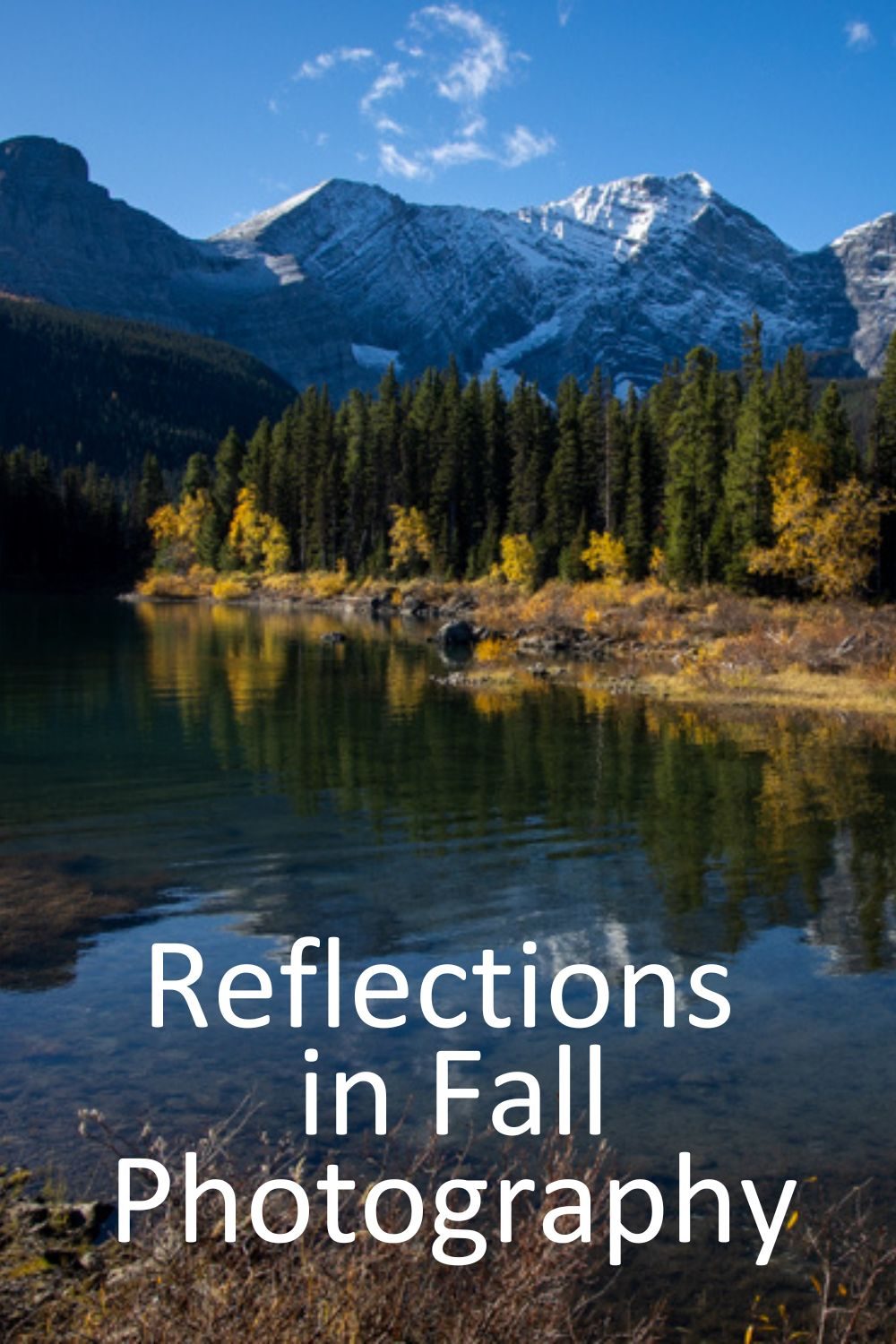
Autumn naturally creates strong visual contrast. Warm reds, oranges, and yellows stand against darker water, fading forests, fog, or overcast skies. Seasonal light in autumn photography also tends to be softer and lower in the sky, which enhances texture and creates more balanced reflections.
There is also an emotional reason reflections resonate so strongly. Water slows the eye down. It invites stillness. In many ways, reflections in fall photography become symbolic of the season itself; a brief moment of beauty before transformation and rest.
Nature reflections photography often reminds us that landscapes are interconnected systems. The sky influences the water. Wind changes the reflection. Fallen leaves become part of the composition. Light moves constantly across the scene. Photography becomes less about controlling nature and more about learning to observe its rhythms.

My Free Fall Photography Fundamentals guide walks you through everything you need to capture not just images, but the true spirit of the season.
Free Guide: Your Best Fall Photos Yet!
You can unsubscribe at anytime. I don’t share your information from this form with anyone.
How To Capture Stunning Fall Reflections
Learning how to capture stunning fall reflections begins with observation rather than camera settings.
Before setting up your tripod, spend time watching the water itself. Is it calm or moving? Are clouds passing overhead? Is the reflection sharp or abstract? Small changes in weather and light can completely alter the mood of a reflection image.
Some of the best moments happen during:
• calm mornings before wind develops
• overcast conditions with soft light
• foggy weather that simplifies the scene
• peak fall color shortly after sunrise or before sunset
Photographing reflections during peak fall color works especially well when the trees along shorelines create layered color in the water. Lakes, ponds, wetlands, and slow rivers are often the best locations for autumn reflections because the water surface remains relatively still.
Calm water reflection photography requires patience. Even a slight breeze can disrupt symmetry and detail. Sometimes I arrive at a location and simply wait. Wind often settles unexpectedly for a few brief moments, and those quiet windows can produce the strongest photographs of the morning.
The Best Camera Settings For Fall Reflection Photography
The best camera settings for fall reflection photography depend largely on whether you want crisp reflections or softer, more abstract movement.
Quick Settings Guide For Fall Reflection Photography
These settings are excellent starting points for getting back into photographing autumn reflections in lakes, ponds, wetlands, and slow moving rivers. Adjust them depending on light, wind, and the amount of movement in the water.
Sharp Calm Water Reflections
Best for still lakes and mirror-like reflections during calm mornings.
• Aperture: f/8 to f/11
• Shutter Speed: 1/60 second to 1/250 second
• ISO: 100 to 200
• Focal Length: 24mm to 70mm
• Tripod: Recommended for maximum sharpnessSoft Long Exposure Reflections
Best for creating dreamy movement and smoothing ripples in the water.
• Aperture: f/11 to f/16
• Shutter Speed: 1 second to 30 seconds
• ISO: 100
• Filters: ND filter recommended
• Tripod: EssentialFoggy Autumn Reflection Photography
Best for atmospheric mornings with soft light and muted color palettes.
• Aperture: f/8 to f/11
• Shutter Speed: 1/15 second to 1 second
• ISO: 200 to 400
• White Balance: Cloudy or Shade for warmer tones
• Exposure Compensation: +0.3 to +1 if fog appears too grayPhotographing Autumn Leaves In Water
Best for close details, floating leaves, and abstract compositions.
• Aperture: f/4 to f/8
• Shutter Speed: 1/60 second or faster if leaves are moving
• ISO: 100 to 400
• Polarizing Filter: Helpful for controlling glare
• Lens Choice: Macro or short telephoto lenses work beautifullyQuick Beginner Tips
• Arrive before sunrise for the calmest water and softest seasonal light.
• Watch the wind carefully because even small gusts can change reflections dramatically.
• Use a tripod whenever possible for sharper images and slower shutter speeds.
• Try both symmetrical and off center compositions to see how the mood changes.
• Slow down and observe before shooting because reflection photography rewards patience more than speed.
Shutter Speed For Reflection Photography
Shutter speed controls how water movement appears.
For sharp reflections on still water, try shutter speeds between 1/60 second and 1/250 second depending on available light.
For long exposure reflection photography where you want softer movement and mood, slower exposures between one second and thirty seconds can create painterly results.
Water is never truly still. Slower shutter speeds interpret its movement differently. Fast shutter speeds preserve detail and texture. Long exposures soften and blur time itself.
Aperture For Landscape Reflections
Aperture for landscape reflections often falls between f/8 and f/16.
These narrower apertures help maintain depth of field so the foreground, reflection, and distant landscape remain connected visually. Reflections work best when the relationship between elements feels unified rather than fragmented.
ISO Settings For Autumn Photography
ISO settings for autumn photography should remain as low as possible to preserve detail and atmosphere.
Autumn scenes often contain subtle tonal transitions in fog, water, clouds, and fading light. Using ISO 100 or ISO 200 helps maintain that natural softness without introducing excessive noise.
When To Use A Polarizing Filter For Reflections
Filters for reflection photography can dramatically change how water behaves visually.
A polarizing filter for water reflections reduces glare and allows you to control how much reflection remains visible. Rotating the filter slightly can either strengthen reflections or reveal detail beneath the water surface.
This is especially useful when photographing autumn leaves in water. Sometimes removing glare helps reveal submerged stones, leaves, or textures beneath the surface while still maintaining the reflected color above.
Polarizers are not about forcing an effect. They are about balancing light respectfully and allowing water to retain its natural appearance.
Using ND Filters To Create Soft, Dreamlike Water
ND filters for long exposure reflections allow you to use slower shutter speeds even during bright daylight.
These filters reduce incoming light, which makes exposures of several seconds or minutes possible. Long exposure reflection photography can transform ripples into flowing texture and simplify busy water surfaces.
I often use ND filters during windy conditions when perfect reflections are impossible. Rather than fighting the movement, I embrace it. Motion becomes part of the emotional language of the image.
This slower process also encourages mindful landscape photography. Long exposures require stillness, patience, and observation. You become more aware of shifting clouds, moving leaves, and changing light because you are forced to slow down alongside the landscape.
Why Early Morning Light Creates Better Reflections
Early morning fall photography consistently produces the calmest and most atmospheric reflection conditions.
Before the world fully wakes, wind is often lighter and water surfaces remain smooth. Morning fog can create incredible mood while simplifying cluttered backgrounds.
Foggy autumn reflection photography works beautifully because fog removes distractions and allows shapes, tones, and color to become more subtle and emotional.
Autumn mornings also contain softer color temperatures. The seasonal shift toward winter creates gentler sunlight that feels quieter and more reflective emotionally.
How Wind And Weather Affect Reflection Photography
Understanding how weather affects reflection photography is one of the most important skills beginners can develop.
Wind directly shapes water texture. Even small ripples can transform sharp reflections into abstract forms.
Rain creates movement and texture across the surface. Fog simplifies scenes and adds atmosphere. Overcast skies reduce contrast and allow colors to feel richer and more balanced.
Air and Water constantly interact. Reflection photography teaches you to observe these elemental relationships instead of resisting them. Sometimes imperfect conditions create stronger images than perfect stillness.
Composition Tips For Stronger Reflection Images
Strong reflection compositions rely on balance, simplicity, and visual harmony.
Composition tips for reflection photography include:
• simplifying distracting foreground clutter
• using reflections to guide the viewer’s eye
• balancing sky, land, and water carefully
• looking for repeating shapes and patterns
• using shoreline curves or branches to frame the scene
Using reflections to create depth in photography works especially well when foreground and background visually echo one another through water.
Rule Of Thirds For Reflection Photography
The rule of thirds for reflection photography can help create dynamic balance.
Placing the horizon on the upper or lower third often works well when one part of the scene deserves greater emphasis. If the sky contains dramatic clouds, allow it more space. If the reflection itself is the subject, lower the horizon.
Should The Horizon Be Centered In Reflection Photos?
Should the horizon be centered in reflection photos? Sometimes absolutely.
Perfect symmetry can create stillness and calm, especially on quiet lakes or ponds during calm conditions. A centered horizon often feels meditative because it reinforces balance between sky and earth.
Other times, asymmetry creates more energy and movement. There is no universal rule. The landscape itself usually tells you what feels right.
Using Foreground Elements To Add Depth And Balance
Foreground elements in reflection photography help ground the image physically and emotionally.
Fallen leaves, driftwood, shoreline stones, reeds, or branches can create connection between the viewer and the water surface.
Photographing autumn leaves in water is especially effective because the leaves themselves symbolize transition and impermanence. Floating leaves become reminders that seasonal beauty is temporary, changing constantly before winter arrives.
But here’s the truth: a foreground is a compositional tool, not a rule.
Landscape photography without a foreground can be just as powerful, sometimes more powerful, than an image anchored by a rock in the bottom third of the frame.
Posts for You About Fall
- Fall Photography Peak Foliage Timing and Planning
- Fall Photography in any Weather
- Fall in Oregon
- Fall Larch Hunt in Kananaskis Country, Alberta
- Colorado Fall Photography
- Fall Editing Tips
- Black and White Fall Photography
- Reflections in Fall Photography
- Unique Fall Angles
- Fall Photography Filters
Creating Abstract Reflection Photos With Ripples And Motion
Abstract reflection photography allows you to move beyond literal documentation.
Wind ripples, moving water, long exposures, and distorted reflections can transform landscapes into painterly forms of color and texture.
Abstract autumn colors in water often become more emotional than realistic. Reds and golds blur into flowing shapes that communicate feeling rather than detail.
Creative reflection photography ideas often emerge when you stop trying to force perfect symmetry and begin exploring motion, abstraction, and atmosphere instead.
How To Photograph Calm Lakes, Rivers, And Ponds
Photographing reflections in lakes and ponds usually works best in sheltered areas protected from wind.
Look for:
• small forest ponds
• wetlands surrounded by trees
• slow moving rivers
• quiet lakes at dawn
• coves protected from open wind
The best locations for autumn reflections are often quieter and less dramatic than famous overlooks. Reflection photography rewards stillness rather than spectacle.
Photographing water in landscape photography also requires awareness of safety and environmental sensitivity. Wet shorelines, fragile vegetation, and muddy banks can easily be damaged by careless movement.
Why Reflections Create Emotional Landscape Photos
Why reflections create emotional landscape photos often comes down to stillness and memory.
Reflections slow the viewer down. They create visual pause. The mirrored landscape feels quieter, softer, and more contemplative.
Water also naturally symbolizes introspection. In autumn especially, reflections often feel connected to transition, endings, renewal, and personal reflection.
Photography as a dialogue with nature becomes especially visible around water. The image is no longer just about the subject. It becomes about relationship; between light and landscape, between weather and season, and between the photographer and the living earth itself.
Mindful Photography: Slowing Down Around Water
Mindful landscape photography teaches us to observe rather than consume.
Water encourages this naturally. You cannot rush reflections. You must watch the surface, the light, the wind, and the atmosphere carefully.
Reflection photography for beginners is valuable because it builds patience and awareness. Technical skill matters, but presence matters just as much.
Photography becomes less about collecting images and more about entering into relationship with place.
Common Reflection Photography Mistakes Beginners Make
Common mistakes include:
• photographing during windy midday conditions
• over sharpening reflections in editing
• cluttering compositions with unnecessary foreground elements
• ignoring changing weather patterns
• focusing only on symmetry instead of mood and atmosphere
Editing fall reflection photos without losing natural atmosphere is also important. Autumn scenes often become oversaturated very quickly during processing. Try to preserve the softness and subtle tonal relationships that made the scene meaningful in the first place.
Ethical And Eco Mindful Practices Around Lakes And Wetlands
Eco mindful photography practices matter deeply in fragile water environments.
Wetlands, ponds, riverbanks, and lakeshores are sensitive ecosystems. Avoid trampling vegetation or disturbing wildlife simply to improve composition.
Respecting the landscape means understanding that the experience of being present matters more than capturing a single photograph.
Nature is not simply a backdrop for content creation. It is a living system we temporarily enter.
Conclusion
Reflections in fall photography remind us that landscapes are never separate pieces. Sky, water, weather, light, leaves, and season all interact constantly. The camera simply allows us to notice those relationships more carefully.
Autumn photography teaches us to appreciate temporary beauty. Leaves fall. Light fades earlier. Water shifts with weather and wind. Nothing remains fixed for long.
That is part of what makes reflection photography so meaningful. The image becomes more than documentation. It becomes a moment of attention and connection.
The next time you stand beside a quiet lake or fog covered pond during autumn, slow down before lifting the camera. Watch how the landscape mirrors itself. Watch how the light changes across the water. Listen to the silence around you.
Sometimes the strongest photographs arrive not when we chase the landscape, but when we allow ourselves to become still enough to reflect alongside it.
- Reflections in Fall Photography
- Why Reflections Feel So Powerful In Fall Landscapes
- How To Capture Stunning Fall Reflections
- The Best Camera Settings For Fall Reflection Photography
- Quick Settings Guide For Fall Reflection Photography
- When To Use A Polarizing Filter For Reflections
- Using ND Filters To Create Soft, Dreamlike Water
- Why Early Morning Light Creates Better Reflections
- How Wind And Weather Affect Reflection Photography
- Composition Tips For Stronger Reflection Images
- Should The Horizon Be Centered In Reflection Photos?
- Using Foreground Elements To Add Depth And Balance
- Creating Abstract Reflection Photos With Ripples And Motion
- How To Photograph Calm Lakes, Rivers, And Ponds
- Why Reflections Create Emotional Landscape Photos
- Mindful Photography: Slowing Down Around Water
- Common Reflection Photography Mistakes Beginners Make
- Ethical And Eco Mindful Practices Around Lakes And Wetlands
- Conclusion
- Posts for You About Fall