
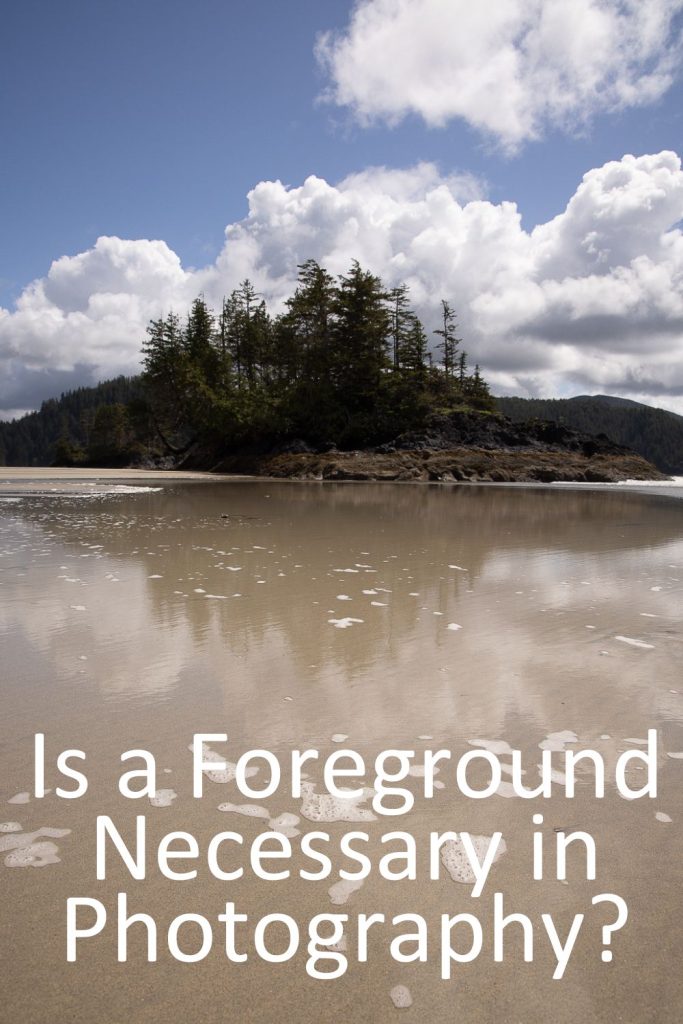
One of the most common beginner questions I hear is this: do you need a foreground in landscape photography?
If you’ve spent any time reading tutorials, you’ve probably been told yes. Add a rock. Find a flower. Place something close to the lens to “create depth.” It’s presented almost like a law.
But here’s the truth: a foreground is a compositional tool, not a rule.
Landscape photography without a foreground can be just as powerful, sometimes more powerful, than an image anchored by a rock in the bottom third of the frame.
In fact, learning when to skip the foreground in landscape photography is often a turning point in developing a more refined eye.
Let’s unpack why.
Do You Really Need A Foreground In Landscape Photography?
When A Foreground Becomes Clutter Instead Of Depth
There’s a difference between depth and distraction.
A weak foreground such as a random bush, a messy patch of dirt, a rock that adds nothing, doesn’t create depth. It creates clutter. And clutter pulls the viewer away from what actually drew you to the scene in the first place.
If the real drama is in the sky, why force a foreground? If the distant mountains glow in layered haze, anchoring the frame is a choice to be made.
Avoiding clutter in landscape photography is one of the fastest ways to improve your work. Sometimes the boldest choice is subtraction.
Simplifying landscape compositions requires discipline. It asks you to remove rather than add. It asks you to trust what already exists in the scene.

Discover Your Next Journey – These Tours are designed for people who connect with light and landscape.
Minimalist Landscape Photography: Letting Space Speak
Minimalist landscape photography composition is about essence over excess. It’s about letting space breathe.
Negative space in landscape photography isn’t emptiness. It gives the viewer room to feel and reflect. Using that negative space emphasizes your subject more. Inserting a foreground would reduce the impact of your subject in the eye of the viewer.
When you remove the foreground, you often amplify mood. The image becomes about atmosphere, light, and tone rather than objects.
This is where elemental minimalism in landscape photography emerges especially in winter or desert environments. The land strips itself back. Your composition can do the same.

Using Telephoto Compression Instead Of Foreground Interest
One of the biggest misconceptions in landscape photography is that depth must come from foreground-to-background layering.
Telephoto landscape photography compression offers another path. With a longer focal length, distant ridges stack visually. Atmosphere creates separation. Light carves shape into the terrain. This is scale through atmosphere instead of objects.
Instead of pulling the viewer into the frame with a rock at their feet, you pull them through layers of air. Through tone. Through light.
The result can feel vast, almost sacred. Photographing vastness without foreground anchors allows awe to emerge from distance rather than proximity.
📸Learn for free!
➡️ FREE Wallpapers and Guides
➡️ DISCOUNTS on future Tours & Tutorials
➡️ TIPS for improving Your photography
You can unsubscribe at anytime.
How Light, Color, And Atmosphere Replace The Need For Foreground
Sometimes the subject isn’t the land : it’s the light.
Emphasizing sky and distance in landscape photography shifts the composition upward. It invites you to ask: what is truly carrying emotional weight in this moment?
Focusing on light and color over depth transforms your priorities. Instead of asking “Where’s my foreground?” you begin asking “What is the light doing?”
This aligns beautifully with seasonal color philosophy. Autumn glow, winter blue minimalism, summer fire sunsets — these become the subject.
Horizon-Centered Compositions And Breaking The Rule Of Thirds
You’ve heard it a thousand times: don’t center the horizon. But horizon-centered composition can be incredibly strong when used intentionally. For example, a perfectly balanced ocean horizon, a desert plain bisected by storm light.
Breaking landscape photography composition rules builds authority in your work. Rules are tools. Not commandments.
When you remove the foreground and center the horizon, you create calm, symmetry, and stillness in your scene.
Abstract Landscape Photography Without Foreground
There are moments when depth cues aren’t needed at all. Abstract landscape photography without foreground leans into texture, tone, and pattern. No anchor. No obvious scale reference.
This approach connects to earth texture photography and elemental abstraction. When you remove the foreground, you remove expectation. The viewer engages differently.
Negative Space, Vastness, And The Feeling Of Awe
Photographing vastness without foreground anchors creates a different emotional response. Negative space becomes the subject.
This is especially powerful in landscapes shaped by the Air and Water elements such as mist, haze, storm, snow. Scale through atmosphere instead of objects feels expansive and contemplative.
You don’t need a rock in the corner to communicate depth. You can communicate depth through silence.
How The Elements Shape Depth Without Objects
Depth can come from these forces rather than from physical foreground objects. Elemental minimalism in landscape photography asks you to trust these natural structures.
Instead of forcing depth, you allow it to emerge from light, season, and atmosphere.
- Air creates atmospheric layering.
- Water creates reflection and tonal gradation.
- Fire creates dramatic sky color and contrast.
- Earth creates texture and tonal variation.
When The Sky Is The Subject
There are moments when the land becomes secondary. For example, a storm cell or gradient sunsets with explosive colors.
In these scenes, adding a foreground would dilute the message. The sky carries scale, drama, and emotion. Emphasizing sky and distance in landscape photography is often about courage to simplify.
Why Composition Rules Are Tools, Not Commandments
Foreground is a compositional tool, not a rule. Breaking landscape photography composition rules doesn’t mean abandoning structure. It means choosing structure intentionally.
Sometimes a strong foreground strengthens the image. Sometimes it weakens it. The key is asking: does this object serve the story of the scene?
If not, let it go.
Learning To Trust The Scene Instead Of Forcing A Foreground
Learning when to skip the foreground in landscape photography is really about learning to trust. Trust the light, the atmosphere., the season, your judgement.
Landscape photography without a foreground can feel exposed at first. You may worry the image lacks depth. But depth isn’t always physical. It can be tonal, atmospheric, and/or emotional.
Minimalist landscape photography composition asks you to see essence over instruction. To simplify.
And sometimes, the most powerful choice you can make is to leave the bottom of the frame empty and let the vastness speak.
Conclusion
A foreground can absolutely strengthen a landscape. It can guide the eye, create depth, and anchor the viewer. But it is not a requirement. It is not a law. It is not something you must force into every frame to prove you understand composition.
When you ask yourself do you need a foreground in landscape photography, the better question might be this: what is the true subject here?
Landscape photography without a foreground invites you to simplify. It invites you to move beyond formulas and into intuition. It encourages you to see composition as a conversation rather than a checklist.
Frequently Asked Questions
No. A foreground is helpful in many situations, but it is not mandatory. If the light, sky, or distant landscape carries the emotional weight of the scene, adding a foreground may actually weaken the composition.
Skip the foreground when it adds clutter, distracts from the subject, or when atmospheric depth, light, or scale are stronger storytelling tools.
Often yes. Removing foreground anchors simplifies the frame and can create a minimalist, atmospheric, or abstract effect depending on how light and distance are used.