

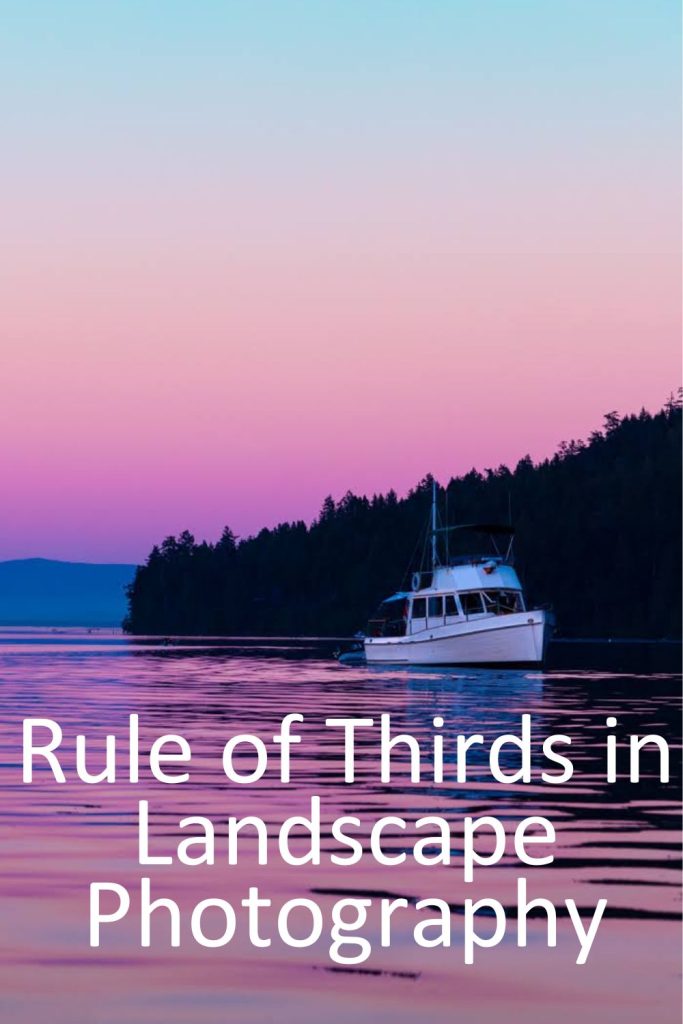
I still remember the first time I intentionally used the rule of thirds in a landscape and actually saw the difference.
It was subtle at first, just shifting the horizon slightly lower, moving a tree off center, but suddenly the image felt more balanced, more natural, like it was working with the landscape instead of forcing it.
When you begin to understand the rule of thirds in landscape photography, you start to see how the land, the sky, and your subject relate to each other.
And more importantly, you start making decisions with intention instead of guessing.
Mastering The Rule Of Thirds In Landscape Photography
What Is The Rule Of Thirds In Photography
The rule of thirds is one of the most fundamental composition techniques in photography. It divides your frame into nine equal parts using two horizontal and two vertical lines.
Where these lines intersect are considered strong visual points. Placing your subject along these lines or at these intersections often creates a more balanced and engaging image.
Instead of placing your subject directly in the center, you shift it slightly off center. This simple adjustment can make a photograph feel more dynamic and natural.
For beginners, the easiest way to understand the rule of thirds is to think of it as a guide rather than a strict rule. It helps you organize the elements in your frame so they feel connected rather than competing for attention.
📸Learn for free!
➡️ FREE Wallpapers and Guides
➡️ DISCOUNTS on future Tours & Tutorials
➡️ TIPS for improving Your photography
You can unsubscribe at anytime.
How To Use The Rule Of Thirds In Landscape Photography
Using the rule of thirds in landscape photography starts with deciding what matters most in your scene.
Is it the sky, the foreground, or something in between? Once you answer that, you can begin placing elements accordingly.
A few practical ways to apply it include:
• placing your main subject along one of the vertical thirds
• aligning important features with intersection points
• using the horizontal thirds to balance land and sky
• allowing space for the viewer’s eye to move through the frame
When used well, the rule of thirds creates a natural flow and balance in the landscape that guides the viewer through the image.

Where Should You Place The Horizon
Horizon placement is one of the most common questions beginners ask, and it’s one of the easiest ways to apply the rule of thirds.
Instead of placing the horizon directly in the middle of the frame, consider placing it along one of the horizontal thirds.
If the sky is dramatic and full of color or texture, place the horizon lower in the frame to emphasize the sky.
If the foreground contains strong textures, patterns, or leading elements, place the horizon higher to emphasize the land.
This simple decision can completely change the mood and impact of your photograph.


Using Leading Lines And Foreground With The Rule Of Thirds
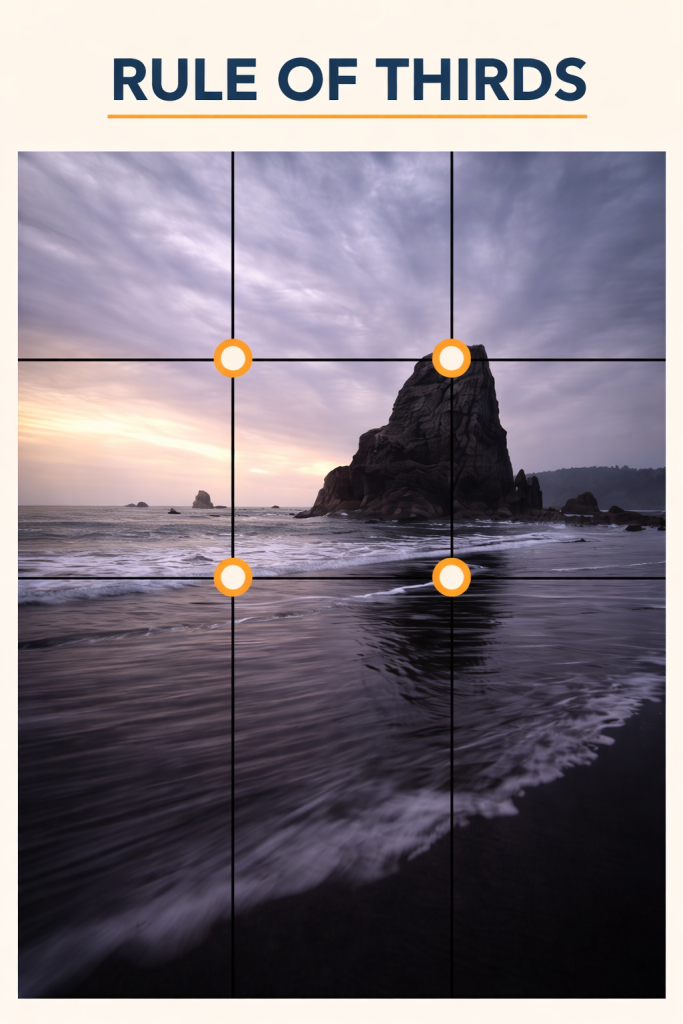
The rule of thirds becomes even more powerful when combined with other composition techniques. Leading lines and foreground elements can guide the viewer’s eye toward a subject placed along a third.
For example a river or trail can lead toward a subject positioned on a third (thinks curves in the river/trail), foreground rocks or plants can anchor the lower portion of the frame, lines (such as waves) within the landscape can connect different parts of the composition.
Foreground and background balance in photography plays an important role here. The foreground should support the composition without overwhelming it.
When everything works together, the image feels intentional and cohesive.
How Negative Space Strengthens A Rule Of Thirds Composition
Negative space and the rule of thirds often work together to create strong, intentional compositions. By placing your subject along a third and leaving open space around it, you give the subject room to breathe and stand out more clearly within the frame.
For example, you might photograph a lone tree positioned along one of the thirds, surrounded by a wide expanse of open sky. In another scene, a distant mountain could sit along a vertical third, balanced by an empty foreground that enhances its scale and presence. Even in a minimal desert landscape, a small subject placed off-center with large open areas can create a powerful sense of simplicity and isolation.
Negative space simplifies the image and reinforces the placement of your subject, allowing the viewer’s eye to settle naturally into the composition. This approach is especially effective in minimalist landscape photography, where simplicity becomes the main visual strength and every element serves a purpose.
Common Rule Of Thirds Mistakes Beginners Make
Like any composition technique, the rule of thirds can be misused when applied too rigidly or without intention.
One common mistake is forcing every subject onto a third, even when that placement doesn’t actually improve the image. Another issue is focusing so much on subject placement that the rest of the frame is ignored, resulting in a composition that feels incomplete or unbalanced.
Photographers also often place the horizon on a third without considering how light, color, or visual weight affects the overall image. In some cases, this leads to imbalance, especially when one side of the frame feels too empty or disconnected from the subject.
The rule of thirds should support your composition, not control it. The goal is not to follow the rule blindly, but to use it as a guide. Always ask yourself whether the placement strengthens the image and helps communicate what you felt in that moment.
Rule Of Thirds Vs Centered Composition When Each Works
While the rule of thirds is a powerful guideline, centered composition can be just as effective depending on the scene and the mood you want to create.
The rule of thirds tends to introduce movement and visual flow into an image. It creates a natural sense of asymmetry and balance, encouraging the viewer’s eye to explore the frame rather than settle in one place. This makes it ideal for dynamic landscapes or scenes where you want to guide the viewer through the image.
Centered composition, on the other hand, often creates a feeling of symmetry and stability. By placing the subject directly in the middle of the frame, you establish a strong focal point and a more formal, grounded presence. This approach works especially well in minimalist scenes, reflections, or situations where calm and stillness are the focus.
Both approaches are valuable tools, and the best choice comes down to intention. The key is to match your composition to the feeling you want to convey, allowing the scene itself to guide your decision.
When To Break The Rule Of Thirds And Why It Matters
One of the most important steps in mastering the rule of thirds is learning when to step away from it. While it’s a powerful guideline, there are moments when centering your subject or ignoring the grid entirely will create a stronger, more compelling image.
You might choose to break the rule when a scene naturally presents symmetry, such as reflections on still water or evenly balanced landscapes where a centered composition enhances the sense of harmony. In minimalist settings, placing the subject directly in the middle can emphasize simplicity and create a calm, grounded feeling.
There are also times when the composition simply feels more balanced without strict alignment to the thirds grid. Trusting that instinct is part of developing your creative eye. In other situations, breaking the rule can introduce tension or contrast, drawing the viewer in and encouraging a longer, more thoughtful look at the image.
Breaking the rule of thirds intentionally is a sign of growth as a photographer. It shows that you’re no longer relying on a formula, but instead responding to the scene in front of you and making deliberate, creative choices based on what feels right.
How To Use The Grid Tool In Your Camera
Most cameras and smartphones offer a rule of thirds grid overlay. This tool places visible lines on your screen or viewfinder to help you compose your image.
Using the grid tool can help you:
• align your horizon more precisely
• position subjects along thirds
• recognize balance within the frame
Over time, you may find that you rely on the grid less as your eye becomes trained to see composition naturally.
Seeing Balance And Harmony In The Landscape
At its core, the rule of thirds is about balance.
It reflects something that already exists in nature. Landscapes rarely feel balanced when everything is centered. Instead, they feel dynamic when elements are slightly offset and interacting with one another.
Visual harmony in photography comes from these relationships.
The land, the sky, and the subject all share space within the frame. The rule of thirds helps organize that space in a way that feels natural and intentional.
In a broader sense, the rule of thirds is less about dividing a frame and more about recognizing balance that already exists in the landscape.
Conclusion
The rule of thirds is often one of the first composition techniques photographers learn, but it remains one of the most valuable throughout your entire journey.
It provides a simple framework for creating balanced, engaging images while still leaving room for creativity and interpretation. When used thoughtfully, it helps guide the viewer’s eye, emphasize important elements, and bring harmony to your compositions.
At the same time, true growth comes from understanding that the rule of thirds is not a rule you must follow every time. It is a tool. One that helps you see more clearly and compose more intentionally.
As you spend more time in the field, you will begin to recognize when to use it, when to adjust it, and when to break the rules.
- Mastering The Rule Of Thirds In Landscape Photography
- What Is The Rule Of Thirds In Photography
- How To Use The Rule Of Thirds In Landscape Photography
- Where Should You Place The Horizon
- Using Leading Lines And Foreground With The Rule Of Thirds
- How Negative Space Strengthens A Rule Of Thirds Composition
- Common Rule Of Thirds Mistakes Beginners Make
- Rule Of Thirds Vs Centered Composition When Each Works
- When To Break The Rule Of Thirds And Why It Matters
- How To Use The Grid Tool In Your Camera
- Seeing Balance And Harmony In The Landscape
- Conclusion
- 📸Learn for free!