
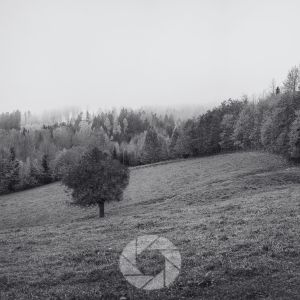

Fall black and white photography may seem almost contradictory. Autumn is celebrated for fiery maples, golden grasses, and forests layered with red, orange, and yellow.
Yet removing those familiar colors can reveal another side of the season, one shaped by texture, contrast, weather, and the graceful structure of the landscape.
Creating compelling monochrome photographs is not simply a matter of draining the color from an image. Creative fall black and white images begin with learning to recognize how light, shadow, pattern, and tone work together.
When color is no longer carrying the photograph, every other visual element must become more intentional.
Creative Fall Black and White Images: Finding Beauty Beyond Autumn Color
Why Photograph Autumn in Black and White?
Color can be beautiful, but it can also become a distraction. A photograph filled with vibrant foliage may initially attract attention while hiding an unremarkable composition beneath it.
Autumn black and white photography challenges you to look beyond the obvious appeal of seasonal color. Bare branches, curled leaves, wet tree trunks, drifting fog, and weathered grasses take on greater importance when photographed through shape and tone.
Monochrome can also give autumn photographs a quieter and more timeless quality. Instead of documenting exactly how the season looked, you can interpret how it felt.

My Free Fall Photography Fundamentals guide walks you through everything you need to capture not just images, but the true spirit of the season.
Free Guide: Your Best Fall Photos Yet!
You can unsubscribe at anytime. I don’t share your information from this form with anyone.
What Makes a Great Black and White Fall Photograph?
A successful black and white image needs a strong visual foundation. Without color, the viewer depends on tonal separation, composition, texture, and light to understand the scene.
Before pressing the shutter, consider whether the subject will remain interesting after its color is removed. Look for a recognizable shape, a clear focal point, directional light, repeating patterns, or a meaningful contrast between bright and dark areas.
A red leaf against green moss may stand out beautifully in color, but those two colors could convert into nearly identical shades of gray. A pale leaf resting against dark wet stone is more likely to retain strong separation in monochrome.

How Can You Learn to See Beyond Autumn Color?
Seeing in black and white is a skill that develops through practice. Begin by imagining the landscape as a range of tones rather than a collection of colors.
Ask which areas will appear light, which will become dark, and whether the important elements will remain visually distinct. Many mirrorless cameras allow you to display a monochrome preview in the electronic viewfinder while still recording a full-color RAW file. This can be an excellent way to practise photography without color while preserving complete editing flexibility.
You can also review potential compositions by briefly lowering the saturation on your camera or phone. Over time, you will begin recognizing monochrome subjects without needing the preview.
What Subjects Work Best for Autumn Monochrome Photography?
Woodlands are particularly well suited to black and white fall landscape photography. Pale trunks, dark evergreens, twisting branches, and forest paths provide natural contrast and structure.
Foggy forests can become especially expressive. Mist reduces background distractions, separates layers of trees, and creates a gradual transition from dark foreground subjects to lighter distant shapes. Photographing fog in black and white often produces a stronger sense of depth than a colorful woodland scene.
Other promising subjects include fallen leaves, bare trees, old fences, rocky streams, seed heads, reflections, rain-darkened bark, and frost-covered plants. Autumn’s transition toward winter provides an almost endless range of monochrome nature photography possibilities.
How Do Texture and Pattern Replace Color?
Texture photography becomes especially important once color is removed. The veins of a leaf, grooves in tree bark, ripples in water, and rows of dried grasses can all become primary subjects.
Photographing autumn textures works best when the light comes from the side. Directional light creates tiny highlights and shadows across uneven surfaces, helping the texture appear three-dimensional.
Repeated shapes can also create visual rhythm. A collection of overlapping leaves, parallel tree trunks, or ripples around fallen branches may become more compelling when transformed into pattern rather than treated as a literal record of the scene.
Why Is Contrast So Important in Black and White Photography?
Contrast in black and white photography does not always mean creating pure whites beside deep blacks. It refers to the separation between tones and the way that separation guides the viewer.
A high-contrast photograph can feel dramatic, graphic, or energetic. Deep shadows beneath trees and bright light on pale leaves may produce a bold fine art image. A low-contrast photograph built from soft grays can feel quiet, mysterious, and contemplative.
The right approach depends on the mood of the landscape. Tonal contrast photography works best when contrast supports the emotional character of the scene instead of being added simply for impact.
How Can Fog and Mist Improve Monochrome Autumn Images?
Fog simplifies busy autumn landscapes. It softens distant details, hides distractions, and creates natural negative space between subjects.
In woodland black and white photography, fog can separate overlapping trees that would otherwise merge into visual confusion. The nearest trunks remain dark and detailed while distant trees gradually fade into pale gray.
Mist also allows ordinary locations to feel unfamiliar. A frequently photographed path or forest can become mysterious when portions of the landscape disappear, leaving the viewer to imagine what lies beyond the visible frame.
What Role Do Shadows Play in Black and White Fall Photography?
Autumn’s lower sun angle produces long shadows that can become central compositional elements. A shadow may create a leading line, divide the frame, emphasize texture, or repeat the shape of the subject casting it.
Shadow photography in autumn works particularly well during early morning and late afternoon. At these times, light moves across the landscape rather than falling directly from above.
Do not automatically brighten every shadow during editing. Dark areas can create depth and mystery, especially when they frame a brighter subject or provide visual balance.
How Can You Use Negative Space for More Powerful Images?
Negative space black and white photography uses quiet areas to strengthen the main subject. Fog, open water, overcast skies, and fields of pale grass can all provide visual breathing room.
A single leaf floating on dark water may be more powerful than a frame filled with dozens of leaves. A bare tree surrounded by mist can communicate solitude in a way that a crowded woodland cannot.
Minimalist autumn photography encourages you to decide what the photograph truly needs. Removing color often makes this process easier because unnecessary elements become more obvious.
What Is an Intimate Black and White Landscape?
Intimate landscape photography focuses on smaller portions of nature rather than expansive vistas. These scenes may not include a recognizable horizon or a traditional foreground, middle ground, and background.
A cluster of rain-covered leaves, a section of exposed roots, or reflections beneath an overhanging branch can express the season without showing an entire forest.
These photographs reward patient observation. Instead of searching for a grand viewpoint, look closely at the relationships between nearby shapes, textures, and tones.
How Can You Create Abstract Autumn Monochrome Photographs?
Abstract autumn photography begins when you stop treating objects only as objects. A tree trunk becomes a series of lines. Reflections become distorted shapes. Fallen leaves become repeating forms rather than individual subjects.
Try filling the frame with a small section of the scene so scale becomes uncertain. Slow shutter speeds can transform moving water or wind-blown foliage into soft tonal studies. Intentional camera movement can turn vertical trunks into sweeping lines and layers of gray.
Abstract monochrome landscape photography gives you permission to interpret autumn rather than describe it literally.
Should You Photograph in Color or Convert Later?
For most photographers, the best approach is to record RAW files in color and convert them during editing. RAW preserves the original color information, allowing individual colors to be translated into different shades of gray.
A yellow leaf and a red leaf may initially look similar after conversion, but adjusting their color channels separately can create better tonal separation. This flexibility is lost when the camera records only a monochrome JPEG.
Using a black and white camera preview is still helpful. It allows you to visualize the result in the field while retaining the full-color RAW file for later processing.
Posts for You About Fall
- Fall Photography Peak Foliage Timing and Planning
- Fall Photography in any Weather
- Fall in Oregon
- Fall Larch Hunt in Kananaskis Country, Alberta
- Colorado Fall Photography
- Fall Editing Tips
- Black and White Fall Photography
- Reflections in Fall Photography
- Unique Fall Angles
- Fall Photography Filters
How Do You Edit Autumn Images in Black and White?
Thoughtful black and white editing photography involves more than selecting a preset. Begin by adjusting the color channels to control how different parts of the original image translate into gray.
Next, refine the overall tonal range. Protect important highlights, deepen shadows carefully, and use local adjustments to guide attention. Dodging and burning can subtly brighten a trail, emphasize textured bark, or darken an unnecessary edge.
Avoid adding extreme contrast to every image. Soft fog, delicate frost, and quiet woodland scenes may need a gentler treatment. The final edit should preserve the atmosphere that drew you to the subject.
Common Mistakes When Creating Black and White Autumn Images
One common mistake is assuming every color photograph will become stronger in monochrome. Images that depend entirely on contrasting foliage colors may lose their structure when converted.
Heavy editing can also create problems. Excessive clarity, crushed shadows, glowing edges, and featureless highlights often make natural scenes feel artificial. Another mistake is ignoring tonal mergers, where important subjects disappear because they share the same gray value as the background.
The strongest black and white photography begins with a suitable subject and deliberate composition. Editing should strengthen that foundation rather than attempt to replace it.
How Can Black and White Change the Way You See Nature?
Mindful landscape photography asks us to pause before deciding what a landscape should look like. When autumn is no longer defined only by brilliant color, quieter details begin to emerge.
You may notice the rhythm of bare branches, the softness of fog, the roughness of bark, or the way a curled leaf reflects a narrow line of light. Photography and simplicity become connected because removing color encourages deeper attention to what remains.
Autumn is a season of transition and impermanence. Monochrome imagery can express that movement without relying on the expected symbols of bright foliage. It reveals the enduring structures beneath seasonal change.
Conclusion
Fall black and white photography offers a way to find beauty beyond autumn’s familiar palette. By concentrating on light, texture, contrast, pattern, and negative space, you can create images that feel expressive rather than simply descriptive. The goal is not to reject color, but to recognize when removing it reveals something more meaningful.
Within eco-spiritual photography, autumn reminds us that change is both visible and hidden. Leaves fade and fall, yet the underlying rhythms of the landscape remain. Photography as observation helps us recognize those patterns and approach the season with greater presence, allowing creative fall black and white images to become reflections of impermanence, stillness, and renewal.
- Creative Fall Black and White Images: Finding Beauty Beyond Autumn Color
- Why Photograph Autumn in Black and White?
- What Makes a Great Black and White Fall Photograph?
- How Can You Learn to See Beyond Autumn Color?
- What Subjects Work Best for Autumn Monochrome Photography?
- How Do Texture and Pattern Replace Color?
- Why Is Contrast So Important in Black and White Photography?
- How Can Fog and Mist Improve Monochrome Autumn Images?
- What Role Do Shadows Play in Black and White Fall Photography?
- How Can You Use Negative Space for More Powerful Images?
- What Is an Intimate Black and White Landscape?
- How Can You Create Abstract Autumn Monochrome Photographs?
- Should You Photograph in Color or Convert Later?
- How Do You Edit Autumn Images in Black and White?
- Common Mistakes When Creating Black and White Autumn Images
- How Can Black and White Change the Way You See Nature?
- Conclusion
- FAQ
- References
- Posts for You About Fall
FAQ
Is Autumn Good for Black and White Photography?
Yes. Autumn provides fog, changing weather, textured foliage, bare branches, long shadows, and strong tonal contrasts that work beautifully in monochrome.
Should I Shoot Black and White Images in RAW?
Yes. Photographing in RAW preserves the original color information, giving you much greater control over tonal conversion and editing.
What Weather Is Best for Autumn Monochrome Photography?
Fog, rain, overcast skies, frost, and directional sunlight can all produce excellent results. The best conditions depend on whether you want a soft, atmospheric image or a more dramatic photograph.
How Do I Know Whether a Photograph Will Work in Black and White?
Look for strong shapes, textures, patterns, shadows, and tonal separation. If the composition depends entirely on color contrast, it may be less successful after conversion.
References
- Adams, Ansel. The Negative.
- Freeman, Michael. Black and White Photography: The Timeless Art of Monochrome.
- duChemin, David. The Visual Toolbox: 60 Lessons for Stronger Photographs.